How Japanese Streamers Actually Soundproof for Livestreaming
Japanese VTubers and streamers rarely soundproof an entire room — they build a small enclosed booth instead. Here's why that approach exists, what it costs, and why copying a Western creator's studio setup often doesn't work in a Japanese apartment.
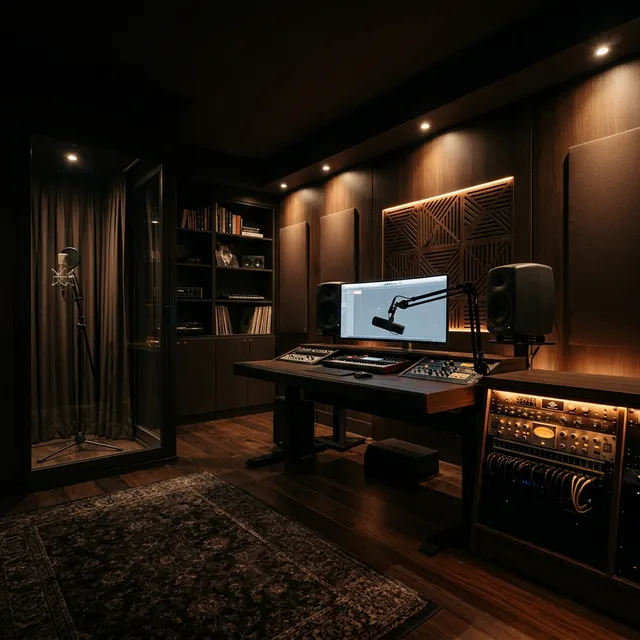
Short answer: Japanese streamers and VTubers don’t usually soundproof the room they stream in — they build or buy a small enclosed booth inside it, sized in tatami-mat units (0.8 to 1.5 jō, roughly 1.3–2.5m²), and stream from inside that box. This looks like overkill to a Western creator used to hanging acoustic foam on bedroom walls, but it’s the direct result of how Japanese housing actually works, not a stylistic preference.
Why “soundproof the room” isn’t the default approach here
Two structural facts about Japanese housing push the solution toward a booth-in-a-room rather than a treated room:
- Most streamers rent, and Japanese leases prohibit wall modification. You can’t legally staple foam to a rental wall or add mass-loaded vinyl behind drywall the way a homeowner elsewhere might. Anything permanent is off the table by default.
- Walls are genuinely thinner than what many international streamers are used to. Wood-frame apartment construction (the dominant type) transmits mid-to-high frequency sound — voice, keyboard clatter, laughter — more readily than concrete or brick construction common elsewhere. Treating the room’s walls wouldn’t meaningfully fix the two directions that matter most: your voice bleeding out to neighbors, and your neighbors’ noise bleeding into your mic.
So the market solved it differently: instead of treating the room, build a self-contained box that doesn’t touch the walls at all.
The three tiers streamers actually use
| Tier | Typical cost | What it solves |
|---|---|---|
| DIY closet booth | ¥30,000〜 (~$200) | Converts an existing closet into a vocal/recording booth using foam-faced panels tensioned in place with rods — zero wall contact, fully reversible for a lease |
| Rental prefab booth | ¥13,000–35,000/month + ¥100,000〜 setup | A factory-built booth delivered and installed, returnable when you move or stop streaming |
| Purchased prefab unit | ¥600,000–1,300,000 for the most common 1.2–1.5 jō size | The long-term option for creators streaming as an ongoing income source, not a hobby experiment |
The DIY tier is disproportionately popular among individual VTubers and new streamers specifically because it’s the only one that requires zero landlord negotiation and zero long-term commitment — you’re testing whether streaming is something you’ll stick with before spending real money.
What livestreaming actually needs that “soundproofing” alone doesn’t fix
A generic “soundproof room” search misses half the problem for a streamer. Two issues matter more for live audio than for, say, practicing an instrument:
- Room echo, not just outside noise. A completely empty room with hard walls creates reverb that makes a voice sound distant and hollow to viewers, even if no outside noise leaks in at all. This is why the small-booth approach works so well for streaming specifically: a tight, foam-lined box kills reverb almost automatically just by being small and absorptive, which is exactly what a livestream mic needs.
- PC and fan noise picked up by the mic. High-end streaming PCs generate real heat and real fan noise inside a sealed booth. Japanese setups commonly solve this by running the PC tower itself outside the booth (through a cable pass-through) and keeping only the monitor, keyboard, and mic inside — a detail that’s easy to miss if you’re planning a build based on Western streaming-room photos, which usually show the whole rig in one open room.
The size that actually works for streaming (and why smaller fails)
Japanese creators consistently report that starting too small is the single most expensive mistake. An 0.8-jō booth fits a person and a mic but not a proper desk setup with multiple monitors — many streamers who start there end up replacing it with a 1.5-jō unit within a year, effectively paying for two booths instead of one. 1.5 jō (roughly a 120cm-wide desk plus chair, camera distance, and lighting) is the size most repeat buyers land on and rarely need to upsize from.
If you’re setting this up outside Japan
The booth-first approach isn’t uniquely Japanese in principle — it works anywhere with the same constraints: renting, thin walls, or simply not wanting to commit to permanent construction. What’s specific to Japan is the maturity of the market around it: standardized prefab sizes, an active resale market for used units (so the purchase tier isn’t a sunk cost), and a rental tier that doesn’t exist in most other countries’ streaming-gear markets. A streamer outside Japan can replicate the booth logic with a DIY panel build even without access to the Japanese prefab brands.