How Much Does It Cost to Soundproof a Room in Japan? (2026)
From a $200 closet DIY build to a $10,000+ prefab soundproof unit, here's what soundproofing actually costs in Japan and why the options look nothing like a Western drywall renovation — plus the subsidy route almost no one outside Japan knows about.
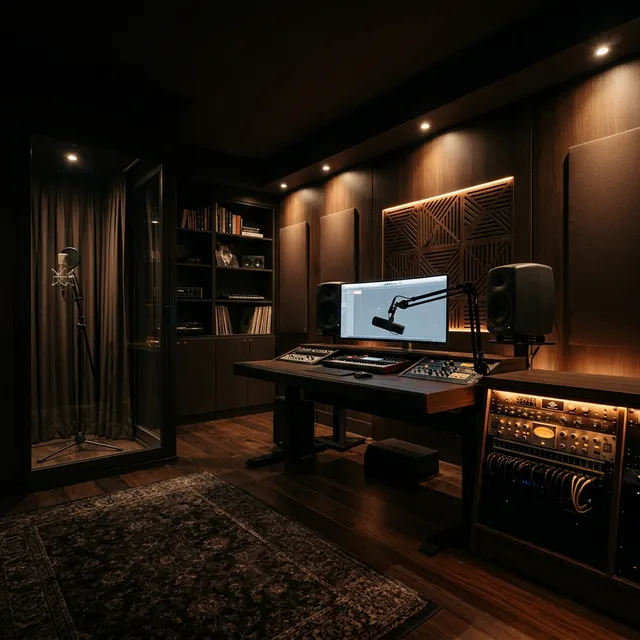
Short answer: soundproofing a room in Japan costs anywhere from about ¥30,000 (roughly $200) for a closet DIY build to ¥1,000,000–3,500,000 (roughly $7,000–$24,000) for a full prefab soundproof unit, depending almost entirely on which of four fundamentally different approaches you choose. If you’re used to pricing soundproofing as “tear open the wall, add insulation and drywall,” none of that applies here — and understanding why explains a lot about how Japan actually builds and rents housing.
Why the Japanese answer looks so different
In most Western housing markets, soundproofing a room means a construction project: you open the wall, add mass and decoupling, close it back up. In Japan, that approach is rare for a simple reason — the vast majority of urban residents rent, and Japanese rental leases almost universally prohibit modifying walls, floors, or ceilings. Even homeowners in wood-frame houses (the dominant construction type) often avoid structural wall work because of cost and because Japan’s seismic codes make load-bearing walls harder to touch casually.
So the market solved the problem differently: instead of building soundproofing into the wall, Japan built a whole product category of self-contained, freestanding soundproof boxes that sit inside a room without touching it — plus a DIY culture built around temporary, removable materials. That’s why “how much does it cost to soundproof a room” gets a completely different answer here than it would in the US or Europe.
The four tiers, and what they actually cost
| Approach | Typical cost | What it actually is |
|---|---|---|
| DIY closet conversion | ¥30,000〜(~$200) | Turn an existing closet into a vocal/recording booth using foam-core panels faced with sound-blocking sheet and absorption foam, held up with tension rods — no wall contact, fully removable |
| Rental soundproof booth | ¥13,000〜35,000/month ( | A prefab unit rented month-to-month from the manufacturer, delivered and installed, returnable |
| Prefab soundproof unit (purchase) | ¥600,000〜3,500,000 (~$4,000-24,000) | A self-contained, factory-built room-within-a-room from brands like Yamaha or Kawai, sized in jō (畳, the tatami-mat unit Japan uses for room area — roughly 1.65m² per mat), delivered and assembled on-site |
| Built-in house/apartment soundproofing | Highly variable, often ¥1,000,000+ | Either a custom-built room in a new house, or window/wall retrofits in an existing one |
The reason a “soundproof room” in Japan is priced and sized in tatami-mat units (0.8-jō, 1.5-jō, 2.5-jō) rather than square meters or square feet is itself a Japan-specific quirk worth knowing if you’re comparing quotes: a 1.5-jō unit (Japan’s best-selling size, roughly enough for an upright piano or a desk-and-monitor streaming setup) is about 2.5m² of usable floor space.
Why the prefab unit is priced the way it is — and why it holds value
A brand-name prefab unit (Yamaha Avitecs, Kawai Nasal) costing ¥900,000–1,300,000 (~$6,000-9,000) for the most popular 1.2–1.5 jō size isn’t just paying for the box. It’s paying for:
- Delivery and on-site assembly by specialists (roughly ¥50,000–150,000, since the unit has to fit through doorways and up stairwells in pieces)
- A dedicated compact air conditioner (roughly ¥50,000–100,000), which is non-optional — a sealed room without ventilation is a genuine suffocation risk, not just a comfort issue
- Floor-load reinforcement in some buildings, since a 1.5-jō unit can weigh 300-400kg and Japan’s residential floor-load standard is 180kg/m²
What surprises most non-Japanese buyers is the resale market: because these units are factory-standardized and buyers can verify the exact model and condition, a well-maintained prefab room can resell for 40-60% of its original price years later — closer to how a musical instrument holds value than how furniture depreciates. That resale liquidity is a large part of why Japanese buyers treat a ¥1,000,000+ purchase as a reasonable option rather than an extravagance.
The subsidy angle most people miss
Japan does not offer a subsidy for “soundproofing” as a stated purpose — but it does offer a substantial national subsidy for energy-efficiency window renovation (currently around 50% of the cost of installing interior double-glazed windows), and double-glazing installed for insulation happens to be one of the most effective ways to cut outside noise. Residents near designated airport or highway noise zones (for example, around Osaka’s Itami Airport or Tokyo’s Haneda) can also qualify for far larger, sometimes near-100%, government-funded soundproofing grants — but those are strictly location-based and require checking an official noise-zone map, not a general application.
Which tier actually fits you
- Testing whether you even need more quiet: start with the closet DIY tier. It’s cheap enough to be a genuine experiment rather than a commitment.
- Renting short-term, or unsure how long you’ll stay in Japan: the rental-unit tier avoids the resale question entirely and can be returned.
- Committed to music, streaming, or recording as an ongoing practice: the purchase tier is usually cheaper over 18+ months than renting, and the resale market means it’s not a sunk cost.
- Building or renovating a house: get the window-subsidy route evaluated first — it’s often the highest-ROI single change available, independent of whether you also add a prefab unit later.
If you’re weighing any of this because you’ve received a noise complaint rather than because you’re planning a music setup, the fix may not require spending anything — see Why Do I Keep Getting Noise Complaints in Japan? for what’s usually going on first.