Soundproof Layouts for Bedrooms and Home Offices
Is your desk facing the wall or the window? The layout of your furniture significantly affects how much noise you hear and how much you leak to your neighbors. Learn the 'Zoning Method' to optimize your bedroom and telework setup for maximum quiet.
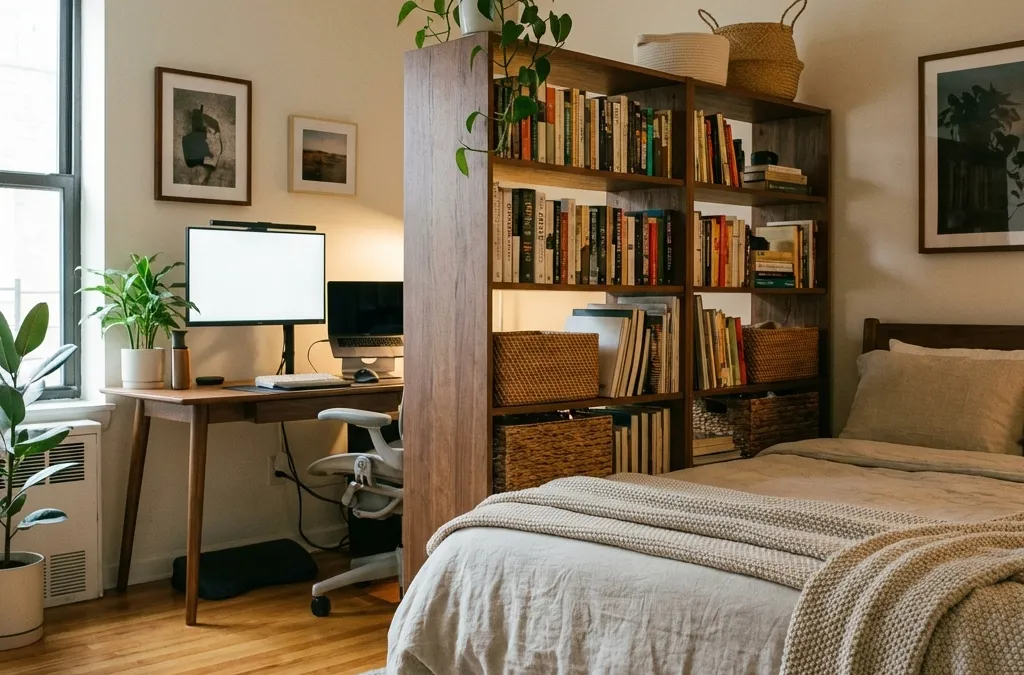
Even without expensive panels, you can improve your room’s soundproofing by simply moving your furniture.
When setting up a home office or bedroom, most people focus on “neatness.” However, if you focus on “Acoustic Zoning,” you can create a much more peaceful environment.
1. The “Window Buffer” Rule
Windows are the weakest point for sound.
- Don’t place your bed or desk directly under a window if you live on a noisy street.
- Do move your bed to the wall furthest from the window and use heavy furniture (like a bookshelf full of books) as a “mass buffer” against the wall shared with a neighbor.
2. Desk Orientation for Streamers/Meetings
- Facing the Wall: If you sit with your back to the room and face the wall, your voice hits the wall directly and “bounces” back into the microphone, often leaking to the next room.
- The ‘Island’ Layout: If possible, sit facing into the room. Use the air space of the room to dissipate your voice before it hits the walls.
3. The Power of “Soft Surfaces”
Sound reflects off hard, flat surfaces (floors, ceilings, desks).
- Rugs: A thick rug under your chair stops “floor impact noise” (moving your chair).
- Curtains as Walls: If one wall is particularly thin, hanging a decorative “wall curtain” can dampen echoes and make the room feel much quietier.
Conclusion
Your room layout is your “Zero-Cost Soundproofing.” By understanding how sound moves through your specific apartment, you can strategically place your desk and bed to shield yourself from the most intrusive noises.