Final Checklist for Soundproof Room Installation | Size, Weight, and Logistics Deadlines
'It was supposed to fit, but didn't.' 'The door hits the wall.' Avoid fatal mistakes in high-ticket soundproof rooms. From the legal basis of 180kg/sqm floor load to transport logistics, editor Omega covers everything.
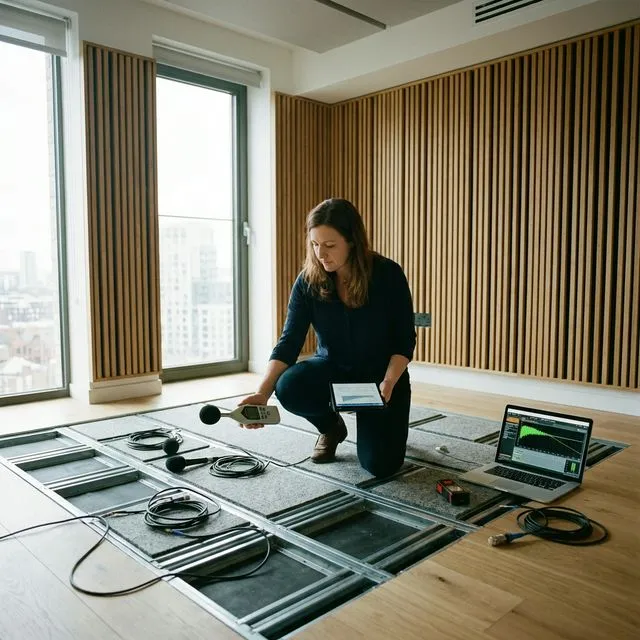
Purchasing a soundproof room is not just getting new gear ; it is an architectural act similar to “Building another house inside your house.”
If you focus only on catalog specs and neglect physical “Compatibility,” you risk paying hundreds of dollars in cancellation fees on delivery day or causing serious damage to your floor.
In this article, we detail the “Deadline Checklist” to ensure you have no regrets after installation.
Conclusion : 90% of Success is Decided by “Pre-Installation” Simulation
The most important factor in choosing a soundproof room is not the D-value or price. It is the physical compatibility of “How many hours you can comfortably spend in that space.”
- Location Selection : How many cm from the wall? A gap of 5-10cm is required for maintenance and heat dissipation.
- Floor Strength : The weight of more than one upright piano (approx. 250kg+) will be concentrated in a space of about 1-tatami (1.5sqm).
The Dilemma of Comfort vs. Space : “Total Width” and Performance Form
The idea of “as long as it fits” significantly degrades playability.
- Instrument Rotation Radius : For instruments with long necks or bows like cellos or guitars, an 0.8-tatami room will result in hitting walls, preventing proper fingering. Always measure your “Maximum Performance Width” and compare it with internal measurements.
- Equipment Heat Issues : If placing a PC or amp inside, the temperature will rise several degrees in minutes. Without assuming an “Effective Area” that includes equipment, it will just become a storage shed.
The Wall of Floor Load : Interpreting the 180kg/sqm Standard
The residential live load limit in Japanese building codes is “180kg/sqm.” However, most soundproof rooms exceed this limit in specific spots.
- Importance of Load Distribution : In modern apartments with a slab thickness of 200mm+, they can often structurally handle up to 1.5-tatami units, but Prior Application to the Management Board is mandatory.
- Considering Reinforcement : When installing on the 2nd floor of a wooden house, placing it over a main beam or considering sub-floor reinforcement is the iron rule. “Ensuring the floor doesn’t sag” is the minimum requirement to protect asset value.
Door Swing and Logistics : Millimeter Measurements Prevent $1,000 Returns
These are mandatory checks to avoid being “Stuck” on delivery day.
- Door Hinge Interference : Right-swing or left-swing? Will it hit walls, closets, or AC units when opened? Without space to open 180 degrees, even moving gear in becomes difficult.
- The “Elevator of Death” Size : Single panels are approx. 2m high and 1m wide. Can these pass through the elevator ceiling and hallway corners? Manual carry surcharges (stairs) can exceed $1,000 depending on the floor level.
Summary : Installation is Physical “Compatibility” ; Compromise Leads to Complaints
A soundproof room only performs as intended once all installation conditions are cleared.
- Obtain written permission for “Heavy Object Installation” from the management company.
- Confirm AC pipe routes and dedicated power sources.
- Finalize the delivery route with an “On-site Survey” by the retailer.
Do not hit the order button while any element remains opaque. By coldly confirming physical constraints, your room will transform into the “Ultimate Creative Sanctuary.”
Related Articles :