
In the world of acoustic engineering, the 1 million JPY (approximately $6,500 to $7,500 USD) mark represents a critical threshold. It is the transition point where a “quiet box” becomes a “Professional Acoustic Environment.”
For international creators, professional musicians, and high-end streamers, this benchmark is more than just a price tag—it is a gateway to commercial-grade quiet. In this guide, we analyze why mid-to-high-end Japanese unit-type soundproof rooms offer unparalleled value in the current global market.
The Technical Breakthrough at the 1 Million Yen Benchmark#
While entry-level booths (priced between $2,000 and $4,000) offer basic isolation, they often fail to meet the rigorous demands of professional recording or late-night grand piano practice. The 1 million JPY investment unlocks three foundational upgrades:
- Standardization of Dr-40 Performance : At this price point, Dr-40 (JIB Standard) becomes the baseline. This means a 95dB grand piano performance is reduced to a “whisper” level in the adjacent room.
- Low-Frequency Structural Integrity : Following the Mass Law , the increased weight and density of 1M-yen class walls effectively block low-frequency vibrations that cheaper, lightweight booths cannot contain.
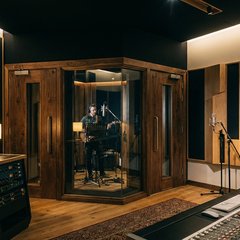
- Internal Acoustic Refinement : Unlike the “dead” or boxy sound of DIY solutions, professional units from Yamaha (Cefine NS) and Kawai (Nasal) integrate acoustic conditioning panels to manage reflections, ensuring your microphones capture only natural, professional-grade sound.
The Global Deal: Why Japanese Precision is a Prime Investment#
As of 2026, the global economic landscape—characterized by a favorable exchange rate for US Dollar and Euro holders—has made high-end Japanese soundproof rooms an extraordinary investment opportunity.
| Feature | Japanese High-End Unit (1M JPY) | Custom Overseas Construction |
|---|---|---|
| Precision : | Millimeter-perfect factory engineering. | Highly dependent on local contractor skill. |
| Resale Value : | Yamaha booths hold ~50-70% value. | Usually Zero (part of the building). |
| Installation : | 4-8 hours (Modular). | Weeks of construction and dust. |
| Price (Est.) : | $6,500 - $7,500 USD | $15,000 - $25,000+ USD |
Investing in a Japanese unit allows you to obtain Japanese precision at a fraction of the cost of a custom-built local studio, with the added benefit of being able to take the room with you when you move.
Real-World ROI for Professionals#
A 1 million JPY soundproof room is not an expense; it is “Silent Infrastructure” designed to pay for itself.
- Eliminating Opportunity Cost : By removing the need to book external studios and the time spent commuting, you reclaim hundreds of hours per year for pure creative production.
- Commercial-Grade Noise Floor : Achieve a noise floor quiet enough for high-sensitivity condenser microphones, allowing for high-margin voiceover work or commercial music distribution from home.
- Longevity and Durability : These rooms are designed for a 15+ year lifespan . When viewed over a decade, the cost of professional silence is less than $2 a day.
Conclusion: Investing in “Silence as an Asset”#
If you view your creative work as a business or a lifelong pursuit, compromising on your acoustic environment is the most expensive mistake you can make. Poor isolation leads to neighbor complaints, and poor internal acoustics lead to unusable recordings.
The 1 million JPY class of soundproof rooms—exemplified by the Yamaha Cefine NS and Kawai Nasal —offers the perfect balance of physics-backed performance and financial sanity. Build your career on a foundation of silence, and let your work be heard exactly as you intended.
Related Articles :