
“I want to play acoustic drums at home!”
This is the ultimate dream for any drummer, but in reality, drums are the “hardest instruments to soundproof.” Unlike pianos or guitars, drums produce explosive noise exceeding 100dB and massive low-frequency vibrations that travel right through the floor.
The cold hard truth: To play acoustic drums in a standard Japanese apartment, you need a minimum of $40,000 in professional construction. However, by utilizing hybrid solutions and electronic kits, you can build a viable practice environment. This guide outlines the physical limits of drum soundproofing and the best strategies for 2026.
1. Why Drums are the “Final Boss” of Soundproofing#
Soundproofing drums is difficult due to two simple physical phenomena:
- Overwhelming Airborne Sound: A snare hit or cymbal crash reaches 100–110dB, equivalent to standing under a passing train or at a construction site.
- Impact-Borne Vibration: The kick drum strike directly shakes the “building’s skeleton (floor and beams),” transmitting sound to neighbors in an instant.
Simply sticking foam sponges on the wall won’t block even 1% of a drum’s output.
2. Requirements for Acoustic Drums: The “Dr-60” Standard#
If you are committed to playing real drums at home, these are your non-negotiables:
| Item | Requirement | Reason |
|---|---|---|
| Performance | STC 60+ (Dr-60) | Reduces 100dB down to a quiet whisper |
| Floor Structure | Floating Floor | Isolates the kick drum’s impact from the building |
| Room Size | Min. 50 sq ft (3 mats) | For kit placement and natural resonance |
| Avg. Budget | $40,000 – $70,000 | For building a “heavy box inside a box” |
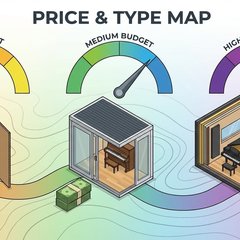
Standard prefab booths (STC 35-40) like the Yamaha Avitecs are not enough for acoustic drums. You need custom site-built construction where the floors, walls, and ceiling are physically decoupled from the original structure.
3. The Realistic Choice: E-Drums + Professional Vibration Control#
For 99% of drummers, the most strategic choice is a “High-End Electronic Drum Kit.”
Benefits of E-Drums#
- Zero Airborne Leak: Since you use headphones, there is almost no sound vibrating the air.
- Space Saving: Fits into a 20–30 sq ft space.
- Lower Cost: Get a pro-tier flagship model for $2,000–$5,000.
Solving the “Silent” Drummer’s Main Issue: Pedal Vibration#
Even if the pads are quiet, the “thump” of the pedals vibrates the floor.
- Solution: Create a vibration platform using high-density rubber mats (at least 20mm thick) and “vibration isolators.” This makes late-night practice a reality even in apartments.

4. The Hybrid Approach: Professional Performance Strategy#
Unless you have a massive budget for a basement studio, we recommend this hybrid setup:
- At Home: E-Drums + Heavy Floor Damping (for daily technical practice)
- Off-Site: Rental Studio (for real drum feel and full-band practice)
This hybrid life is the most efficient, neighbor-friendly, and cost-effective way to live as a drummer in 2026.
5. Conclusion: Don’t Let Noise Stop Your Passion#
Drums are the most environment-dependent instruments. The biggest risk is getting into a neighbor dispute and losing your drive to play altogether.
Be realistic about your soundproofing needs and invest wisely. Finding a way to drum without holding back—even once or twice a week—is the greatest joy for any serious player.
※ Note: Drum room construction adds significant weight. Always consult with a structural engineer to ensure your floor can handle the load.