Soundproof Home Studio Troubleshooting: Engineer's Guide to Leaks, Mold, and Ventilation Failure
Is your booth leaking more than it used to? Are you noticing a strange odor? 80% of soundproof room failures stem from airtight seal degradation and humidity mismanagement. Learn the diagnostic protocols for gasket testing, chemical mold eradication, and ventilation restoration.
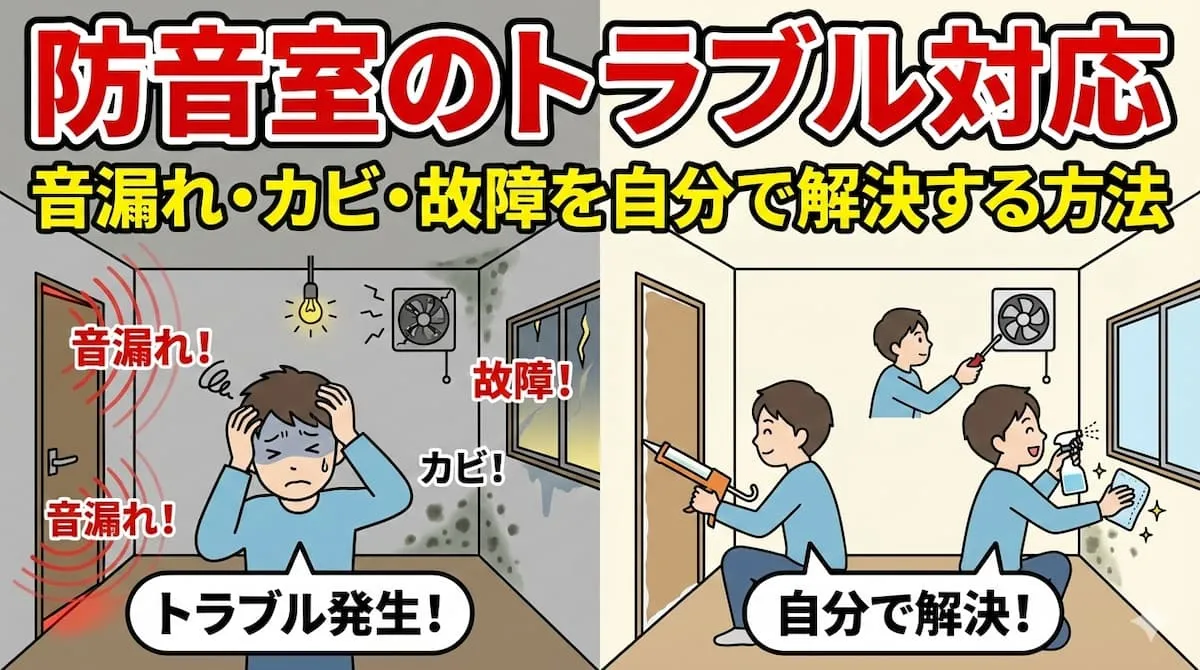
Bottom Line: The acoustic performance of a studio is not a static constant—it degrades without strict system protocol.
Many owners assume soundproofing is a “set and forget” investment. In reality, the rubber gaskets (air-tight seals) that maintain your isolation rating are prone to hardening and fatigue. Furthermore, a hermetically sealed box is the perfect incubator for mold. Ignoring these “system health” indicators can turn a $20,000 investment into a biohazard or a social liability (noise complaints) within years.
This briefing delivers an engineering framework for diagnosing and restoring your creative ecosystem.
1. The Diagnostic Phase: “System Audits”
Before symptoms become failures, perform these standardized checks.
The “Paper Squeeze” Airtight Audit
Used to verify if the door gaskets are still providing a true seal.
- Protocol: Close an A4 sheet of paper in the door seal. If the paper pulls out with little resistance, your airtightness is compromised.
- Impact: Even a 1mm continuous gap can degrade your isolation by 10dB+, effectively nullifying a pro-grade D-rating.
The “Tissue Suction” Ventilation Check
Hold a single-ply tissue near the intake/exhaust fan.
- Logic: If the tissue doesn’t adhere to the intake or flutter at the exhaust, your airflow is choked by filter particulates or motor fatigue.
2. Engineering Solutions for Common Failures
I. Acoustic Leakage (Performance Drop)
- Root Cause: Door frame misalignment or degradation of acoustic putty around AC penetrations.
- Fix: Re-torque the hinge screws to adjust the door hang. Re-apply fresh acoustic sealant to the cable/pipe entries.
- Risk Note: Avoid generic silicon caulking in modular units; it can make future disassembly impossible, destroying the unit’s resale value (NPV).
II. Bio-Risk: Mold & Odor
- Root Cause: Sustained humidity above 60% leading to deep fungal colonization within acoustic fabrics.
- Removal Protocol:
- Clean surfaces with 70%-80% Hydrogen Peroxide or Isopropyl Alcohol.
- Run a compressor-based dehumidifier 24/7 with a hard target of 45% Relative Humidity.
- Warning: If mold penetrates the core insulation (Rockwool), surface cleaning is useless. You must replace the affected panel entirely.
III. Condensation (Thermal Bridging)
- Root Cause: Massive Delta-T (temperature difference) between the interior and exterior without proper dry-out cycles.
- Fix: Never use humidifiers inside a booth. Implement a 10-minute “Flush Out” protocol (door wide open) after every session to equalize air.
3. The Repair ROI Matrix: DIY vs. Pro Service
| Item | Difficulty | Est. Cost | Trigger for Pro Call |
|---|---|---|---|
| Gasket Cleaning | Low | $10 | Seals still leak after cleaning |
| Filter Cleaning | Low | $0 | Monthly requirement |
| Door Gasket Replacement | Mid | $300 - $600 | Genuine parts required for D-rating |
| Ventilation Motor Swap | High | $500+ | Electrical wiring required |
4. Summary: Maintenance is Risk Mitigation
Isolation failure is usually progressive, not sudden. You don’t want to find out your seals are dead via a legal warning from a neighbor.
- Execute a monthly Airtight Audit.
- Maintain hard 45% Humidity levels.
- Address mechanical noise early.
Proactive system management is the only way to safeguard your creative investment and your reputation in a high-density environment.