Can I Rent or Lease a Soundproof Room? The Smartest Way to Borrow for Individuals and Corporations
Is there a way to use a soundproof room without buying one? Thorough explanation of the difference between rentals for individuals like Yamaha's 'Oto-Rent' and lease contracts for corporations, break-even points, and the benefits of expense processing.
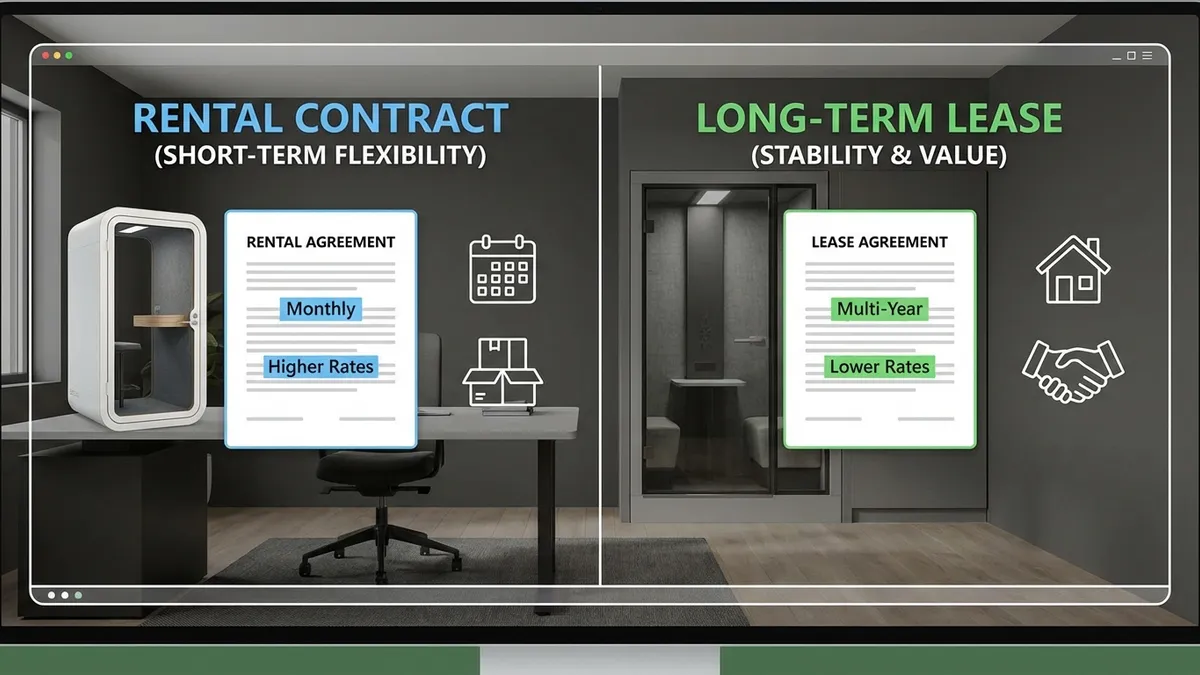
“I want a soundproof room, but it’s tough to pay 1 million yen in full.” “I move a lot, so I’m afraid it will be a hindrance when I leave.”
In such cases, renting or leasing a soundproof room becomes an option. However, once you start looking into it, questions like “Can individuals borrow?”, “Is it cheaper to just buy it after all?”, or “Can I write it off as an expense?” never end.
In this article, instead of the perspective of a studio engineer, I’ll take the perspective of a “Manager/Business Person” and explain the smart ways to “borrow” a soundproof room.
What’s the Difference Between “Rental” and “Lease” Anyway?
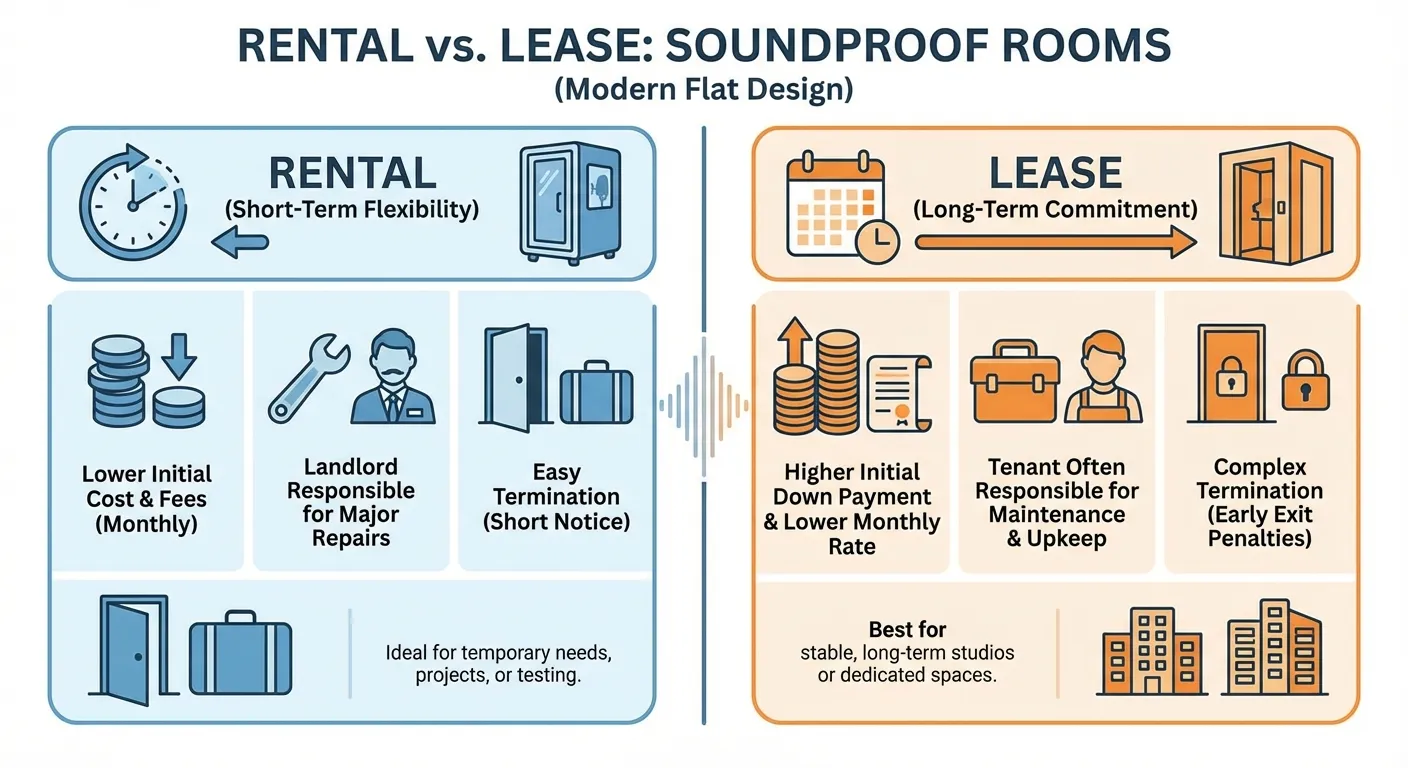
The words are similar, but the nature of the contracts is completely different.
Rental (For Individuals and Corporations)
- Period: From a few days to a few years (relatively short).
- Ownership: Belongs to the rental company.
- Cancellation: Possible (cancellation fees may occur).
- Product: Choose from the rental company’s inventory (mostly used).
- Pros: Easy to try. Can be returned when no longer needed.
Lease (Mainly for Corporations and Sole Proprietors)
- Period: 3 to 10 years (long-term).
- Ownership: Basically the leasing company. Can be purchased after the contract expires.
- Cancellation: Principally not possible.
- Product: The leasing company buys a new one on your behalf and lends it to you.
- Pros: Can introduce a new product with 0 yen initial cost. Can be fully recorded as an expense.
Recommended for Individuals: Rentals like Yamaha’s “Oto-Rent”
For individual use, rentals are the most realistic.
Yamaha’s “Oto-Rent”
This is synonymous with soundproof room rentals in Japan.
- Monthly Fee: From approx. 15,000 JPY (varies by size).
- Minimum Period: From at least 12 months.
- Features: Rental items are cleaned used products. If you like it, you can perform a “buyout mid-contract” by applying the rental fees you’ve paid.
For people who worry, “What if I get bored?” or “What if it feels too oppressive once I actually put it in the room?”, this is ideal as a trial period.
Waltz
- Features: Handles Kawai’s “Nasal” soundproof rooms.
- Pros: In some cases, there are more options than Yamaha.
Recommended for Corporations & Sole Proprietors: Lease Contracts
If you are a sole proprietor (streamer, music instructor) or a corporation thinking “I want to write off the soundproof room as a business expense,” a lease might be a better deal.
Biggest Benefits of a Lease: Cash Flow and Expenses
- 0 Yen Initial Cost: If you buy a 1.0 million yen soundproof room, the cash on hand decreases by 1.0 million yen, but with a lease, you only have to pay tens of thousands of yen monthly. You can preserve your operating capital.
- Expense Processing: If purchased, an expensive soundproof room becomes a “fixed asset” and must be depreciated over several years. However, with lease fees, you can often record each monthly payment as a “full expense (lease fee)” (please check with a tax accountant as it depends on contract details and tax laws).
”Buy” vs. “Rental”: Where is the Break-even Point?
What you’re probably concerned about is, “Which is a better deal: continuing to borrow or buying?”
The Guide is “3 to 4 Years”
Generally, if you continue to pay monthly rental fees, they will exceed the “purchase price” in about 3 to 4 years. (Example: 30,000 JPY/month x 36 months = 1.08 million JPY)
- If you use it for less than 3 years (moving for work, only during exam season) → Rental is a better deal.
- If you use it for more than 3 years (settling down for activities) → Purchase (or installment loan) is a better deal.
Hidden Costs: Shipping and Assembly Fees
In the case of rentals, delivery/assembly fees (tens of thousands of yen) and disassembly/removal fees upon return are also incurred. If you don’t calculate including these “round-trip costs,” you might end up in the red even with short-term use.
Summary: Decide by Your “Activity Period”
- Trial / Short-term / Moving for work → Rental like Yamaha’s “Oto-Rent.”
- Long-term Activity / Owned Home → Purchase with credit or a loan.
- Business Use / Tax Saving → Lease, which preserves your cash on hand.
A soundproof room is an “investment in space,” but there is more than one way to pay for it. Choose the plan that suits your activity style (and your wallet).