Sound Insulation vs Absorption Explained | Essential Knowledge for Choosing Soundproof Rooms in J...
Sound insulation and absorption are both crucial for soundproofing, but serve completely different purposes. Learn how insulation structures work, absorption materials function, and how to combine them effectively. Understanding this distinction prevents costly mistakes when selecting soundproof ...
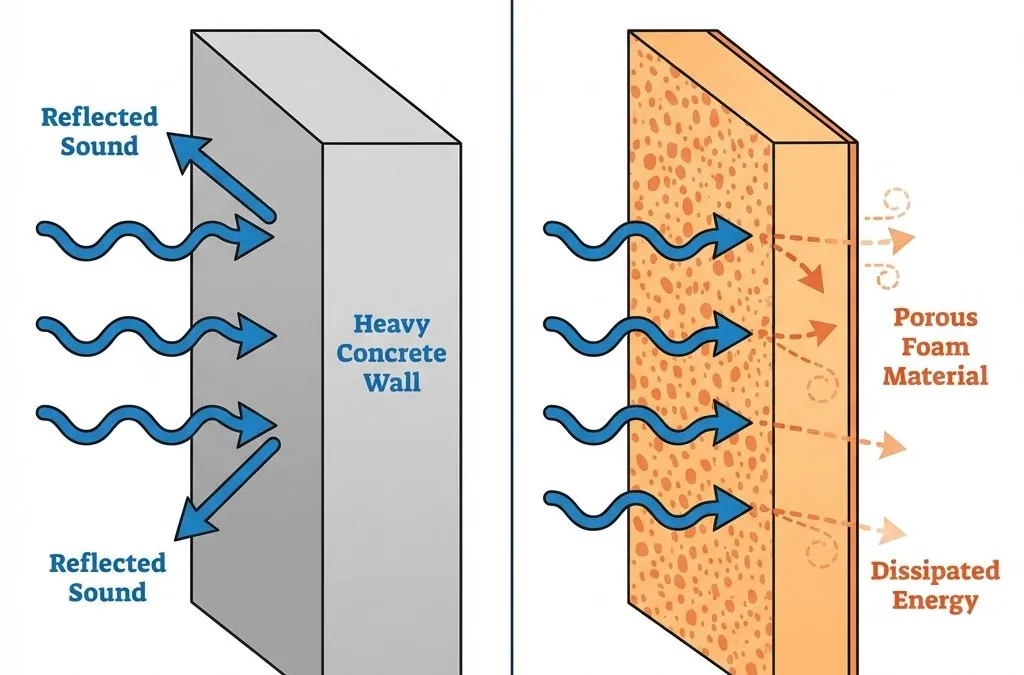
“If I put absorption foam on the walls, will that stop sound from leaking?”
Many people ask this question, but the answer is “No.”
Soundproofing involves two distinct concepts: “sound insulation” and “sound absorption,” each serving completely different roles. Insulation prevents sound from escaping, while absorption improves indoor acoustics.
Choosing a soundproof room without understanding this difference leads to failures like “more sound leakage than expected” or “poor indoor acoustics.”
This article thoroughly explains the difference between sound insulation and absorption from a professional perspective.
Sound Insulation | Technology to “Reflect” Sound
Definition of Sound Insulation
Sound insulation is the technology of blocking sound and preventing it from escaping to the outside.Sound travels as air vibrations. Insulation physically “reflects” or “blocks” these vibrations, preventing sound transmission to external spaces.
Principle of Sound Insulation:- Uses heavy, high-density materials
- Reflects air vibrations
- Reduces sound transmission to outside
Sound Insulation Performance Indicator: “D-Value”
Insulation performance is expressed by the “D-value” mentioned earlier.
| D-Value | Insulation Performance | Audibility in Adjacent Room |
|---|---|---|
| D-30 | Low | Faintly audible |
| D-40 | Medium | Barely audible |
| D-50 | High | Almost inaudible |
| D-60 | Very High | Complete isolation |
Types of Sound Insulation Materials
Materials used for insulation are fundamentally heavy and high-density.
Major Insulation Materials:| Material | Density | Characteristics |
|---|---|---|
| Concrete | Very High | Optimal for building structures |
| Gypsum Board | High | Affordable and easy to install |
| Sound Insulation Sheet | Medium-High | Flexible, can be installed gap-free |
| Lead Sheet | Very High | High performance even when thin (rarely used now) |
[!IMPORTANT] For insulation materials, “weight” is everything. Light materials cannot achieve high insulation performance.
Sound Absorption | Technology to “Absorb” Sound
Definition of Sound Absorption
Sound absorption is the technology of absorbing sound energy and reducing sound reflection.Sound reflects within spaces, creating echoes (reverberation). Absorption reduces these reflections, creating a clear acoustic environment.
Principle of Sound Absorption:- Uses porous (hole-filled) materials
- Converts sound energy to heat energy
- Suppresses sound reflection
Absorption Coefficient Indicator
Absorption performance is expressed by the “absorption coefficient (α),” ranging from 0 to 1.
| Absorption Coefficient | Performance | Material Examples |
|---|---|---|
| 0.0-0.2 | Low | Concrete, glass |
| 0.2-0.5 | Medium | Carpet, curtains |
| 0.5-0.8 | High | Glass wool, urethane foam |
| 0.8-1.0 | Very High | Special absorption materials (rock wool, etc.) |
Types of Sound Absorption Materials
Absorption materials are fundamentally light and porous.
Major Absorption Materials:| Material | Characteristics | Applications |
|---|---|---|
| Glass Wool | Glass fiber cotton-like material | Inside walls, ceiling cavities |
| Rock Wool | Rock fiber cotton-like material | Soundproof room interiors |
| Urethane Foam | Sponge-like material | Recording studios, streaming booths | | Absorption Panels | Panels with textured surfaces | Wall decoration + function |
[!TIP] Absorption materials are fundamentally “light and porous.” Heavy materials are not suitable for absorption.
Insulation vs Absorption | Comparison Table
| Aspect | Sound Insulation | Sound Absorption |
|---|---|---|
| Purpose | Prevent sound from escaping | Improve indoor acoustics |
| Principle | Reflect sound | Absorb sound |
| Material Characteristics | Heavy, high-density | Light, porous |
| Main Materials | Concrete, gypsum board | Glass wool, urethane foam |
| Effect | Prevent external sound leakage | Reduce indoor echo/reverberation |
| Performance Indicator | D-value (insulation rating) | Absorption coefficient (α) |
| Standalone Use | Prevents leakage but room reverberates | Comfortable indoors but sound leaks |
Common Misconceptions and Correct Knowledge
Misconception 1: “Adding Foam Stops Sound Leakage”
× Misconception: Applying absorption foam (urethane foam, etc.) to walls prevents sound from escaping
○ Truth: Absorption materials only absorb sound; they don’t prevent leakage
- Absorption materials are light and porous, allowing sound to pass through
- Insulation performance (D-value) is nearly zero
- Insulation materials are essential to prevent external leakage
- You may have seen YouTube streaming booths with walls covered in urethane foam. This is “to improve indoor sound quality,” not “to prevent sound leakage.”
Misconception 2: “Insulation Materials Alone Are Perfect”
× Misconception: Just thickening walls with gypsum board or concrete is sufficient
○ Truth: Insulation materials alone create poor indoor acoustics
- Insulation materials reflect sound, causing excessive indoor reflection
- For musical instruments or recording, echoes worsen sound quality
- Combining with absorption materials is essential for comfortable acoustics
Misconception 3: “Soundproof Curtains Are Enough”
× Misconception: Installing soundproof curtains prevents sound leakage
○ Truth: Soundproof curtains primarily provide “absorption,” with limited insulation
- Soundproof curtains are fabric-based and light, offering very low insulation
- They suppress high-frequency reflections (absorption) but low frequencies pass through
- Effect is limited to “slightly reducing neighbor noise”
Combining Insulation and Absorption in Soundproof Rooms
Soundproof rooms are designed by combining insulation structures with absorption materials.
Standard Soundproof Room Structure
Exterior (Insulation Layer):- Outer wall: Gypsum board + insulation sheet
- Air gap: Blocks vibrations
- Inner wall: Gypsum board
Interior (Absorption Layer): 4. Absorption material: Glass wool, rock wool 5. Interior finish: Absorption panels, wallpaper
This structure ensures:
- Insulation layer prevents external sound leakage
- Absorption layer optimizes indoor acoustics
Optimal Balance by Use Case
| Use Case | Insulation Priority | Absorption Priority |
|---|---|---|
| Piano Practice Room | High | Medium |
| Recording Studio | High | High |
| Streaming Booth | Medium | High |
| Drum Practice Room | Very High | Medium |
Summary | Using Insulation and Absorption Appropriately
Sound Insulation:- Prevents sound from escaping outside
- Uses heavy, high-density materials
- Performance measured by D-value
- Improves indoor acoustics
- Uses light, porous materials
- Performance measured by absorption coefficient
- Exterior insulation layer (gypsum board + insulation sheet)
- Interior absorption layer (glass wool + absorption panels)
- Insulation is essential to “prevent sound leakage”
- Absorption is essential to “improve indoor sound quality”
- Combining both creates the ideal soundproof environment
Use this knowledge to choose the optimal soundproof room for your needs.
Related Articles
- [Technical Guide]: The Truth About D-Values
- [Basics]: Soundproof Room Prices in Japan【2025 Latest】
- [Comparison]: Top Soundproof Room Manufacturers Compared