Soundproof Room Climate Control Guide 2026 | Physically Preventing Heat, Condensation, and Dryness
Soundproof rooms often suffer from 'Sauna conditions,' 'Instrument cracking,' or 'Mold' due to high airtightness. We explain optimal climate management from AC tips to CO2-reducing ventilation.
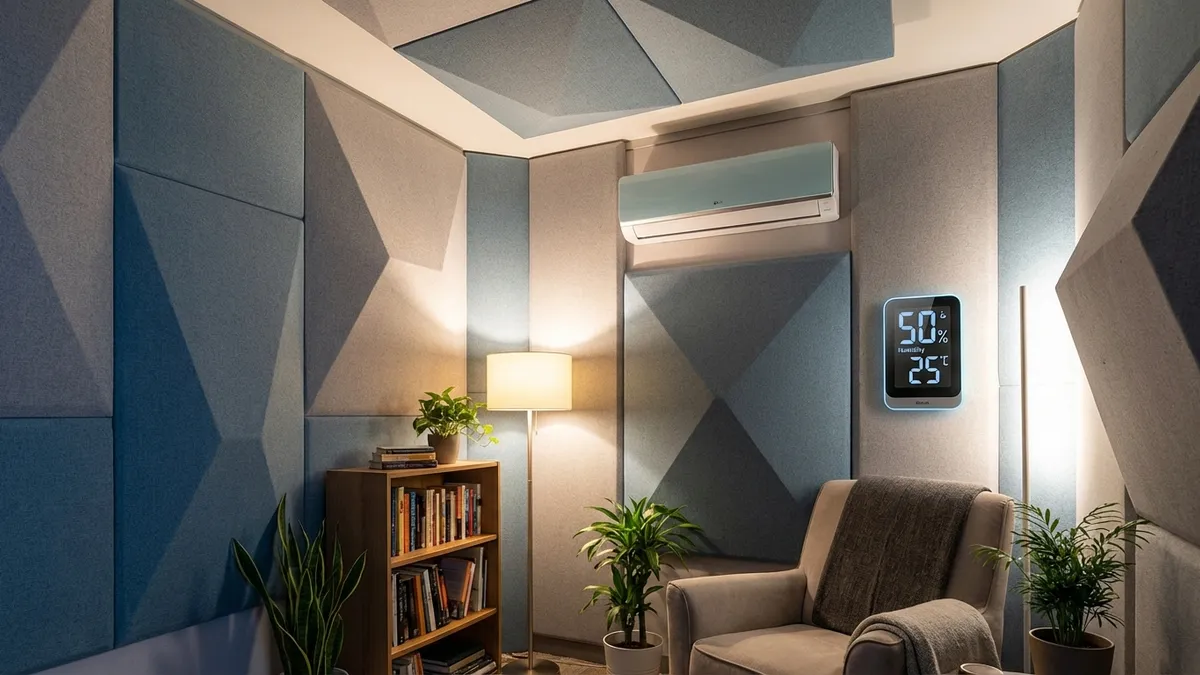
“My expensive soundproof room is so hot I can’t stay in it for more than 15 minutes.” “In winter, my precious guitar’s neck warped.”
The biggest hurdle many face after getting a soundproof room is “Climate Control.”
In short, while soundproof rooms have extremely high airtightness to block sound, they also become a “Giant Thermos” that traps heat and moisture .
In this article, we share environment management techniques based on physics to protect your instruments and your health.
Being “Hot and Stifling” is a Physical Inevitability
Deterioration of the environment inside a soundproof room is caused by the stagnation of energy in a highly airtight space.
- Rapid Heating via Body Heat : Just one person staying inside raises the temperature by approx. 2-3°C and humidity by 10-15% per hour.
- Accumulation of Equipment Heat : Electronics like PCs, monitors, and amps become massive heat sources in a small room.
- Stagnant Air (Rising CO2 Concentration) : Gaskets that maintain high isolation (Dr-rating) allow zero drafts. Without ventilation, oxygen levels drop within minutes, lead to a lack of focus and health risks.
The “Golden Standards” for Temperature and Humidity
To keep your soundproof room ideal, we recommend monitoring these values constantly with a digital meter.
| Item | Target Value | Reason for Management |
|---|---|---|
| Temp (Summer) | 24 - 26°C | Prevents heatstroke and hardware thermal runaway. |
| Temp (Winter) | 20 - 22°C | Prevents wall condensation from temperature differences. |
| Humidity | 40 - 60% | Approx. 50% is safest for wooden instruments and throats. |
| Air Quality | 2+ Air Changes/Hr | Keeps CO2 concentration below 1,000ppm. |
Three Life-Support Systems for Air Control
Soundproof Ventilation | The Lifeline for Oxygen and Condensation
In a soundproof room, ventilation is a “Matter of Life Support” more than just comfort.
Installing an “Energy Recovery Ventilator (e.g., Mitsubishi Lossnay)” that exchanges air without leaking sound is a minimum requirement for modern soundproof living. Adhere to a rule like “Open the door fully for 5 minutes every hour.”
Air Conditioning | The Only Solution to the “Summer Sauna”
A common regret is overestimating passive airflow. A narrow soundproof space will become a sauna in minutes without cooling in summer.
Modular soundproof rooms can have AC retrofitted using dedicated ports. If using a spot cooler, you must rigorously apply “Omega-style” fitting (wrapping ducts in soundproof sheets) to prevent sound leakage through the exhaust.
Dehumidifiers & Humidifiers | Protecting Asset Value
If humidity exceeds 70% , mold grows on acoustic materials. If it falls below 40% , piano soundboards and guitar necks risk cracking.
- Rainy / Summer Season : We recommend compressor-type dehumidifiers that support continuous drainage.
- Winter Season : Evaporative humidifiers are ideal as they don’t over-warm the room. Steam-types risk spiking humidity too high in airtight spaces, so use them with extreme caution.
Seasonal Maintenance Checklist
Summer (June - September) : Heatstroke and Mold Warning
- Run the AC 10 minutes before entering to remove “latent heat.”
- If humidity exceeds 60% , set the dehumidifier to high-power mode.
- Keep the ventilation running for 30+ minutes after use to dry out any moisture absorbed by the walls.
Winter (December - February) : Dryness and Instrument Cracking Warning
- Ensure the humidifier is refilled so humidity doesn’t drop below 40% .
- Watch for “Over-drying” from the heater; use the humidifier simultaneously.
- Adjust airflow so freezing outside air doesn’t hit instruments directly during ventilation.
Conclusion : Commitment to Air Defines Soundproof Life Quality
Neglecting climate control turns your investment into a “place of suffering.” Start by installing an Accurate Digital Thermo-Hygrometer and understanding how the environment changes with your usage.
Manage your “Air” with the same passion you have for “Sound.” This is the fastest route to protecting your instruments as lifelong assets while bringing out your best performance.
Related Articles :