Understanding Sound Insulation D-Value | Comparison Table for D-30 to D-65
Understand the D-Value (Sound Insulation Grade) with our easy comparison table. Learn how to choose the right soundproofing level from D-30 to D-65 for your instruments and lifestyle in Japan.
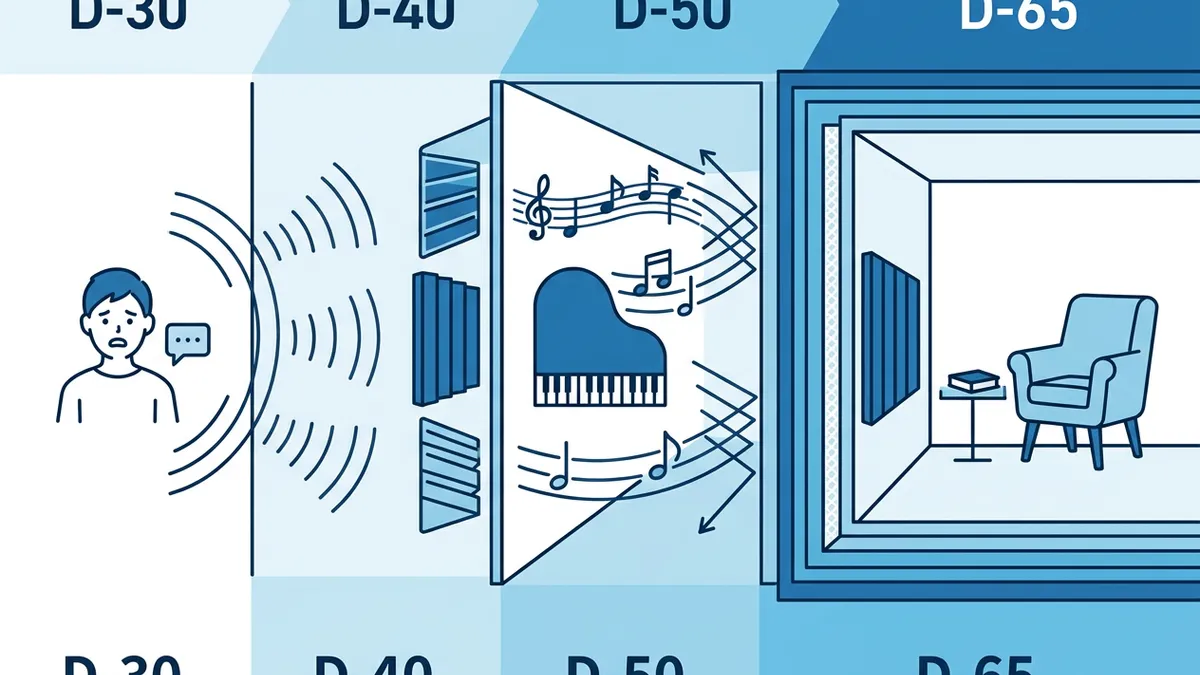
Are you wondering how much soundproofing you need to block neighbors’ noise or keep your own sounds inside? In the soundproofing industry, especially in Japan, the D-Value (Sound Insulation Grade) is used as a common standard.
By understanding the D-value correctly, you can choose the right performance without wasting budget. In this article, we explain the soundproof levels from D-30 to D-65 with an easy-to-understand comparison table.
What is the “D-Value” for Sound Insulation? Basic Guide for Beginners
The D-Value is like the “thickness of the sound wall” showing how much noise the walls or doors block.
- Higher number means better soundproofing : D-40 blocks more sound than D-15.
- Ranked in increments of 5 : Generally categorized every 5 decibels (dB) in Japan.
- Difference from Dr-Value : They essentially mean the same thing, but D-value is used for building structures, while Dr-value is often used for prefabricated soundproof units like Yamaha Cefine.
When planning your soundproofing, use this value to think about “how many decibels the current noise needs to be reduced by” to feel quiet.
[Comparison Table] Soundproof Levels D-30 to D-65 and How Noise is Heard
To help you visualize, here is a table summarizing how actual daily sounds are heard through different D-values.
| D-Value (Dr-Value) | Impression of Sound from Next Door | Personal Perception |
|---|---|---|
| D-30 | Loud conversations are clearly understood | Not very quiet |
| D-35 | Piano sounds like a regular conversation | Acceptable for daytime practice |
| D-40 | Piano sound is reduced to a faint whisper | Night practice becomes feasible |
| D-50 | Instrument sounds are barely audible | High performance for professionals |
| D-60+ | Almost complete silence | Suitable for loud instruments like drums |
In conclusion, D-35 or higher is typical for musical instruments or midnight streaming in Japan, while around D-50 is the goal for professional quality.
Recommended D-Values by Instrument and Lifestyle
Depending on your goal, here are the minimum D-values you should aim for.
- Piano (Upright/Grand) : D-35 to D-40+ is essential.
- Remote Work / Web Meetings : Around D-30 prevents meeting contents from leaking out.
- Video Streaming / Singing : Around D-35 allows you to speak loudly even at night.
- Percussions (Drums, etc.) : D-60 or higher is required along with floor vibration isolation.
Choosing a “slightly higher value than needed” will more reliably prevent noise complaints after moving in.
How to Easily Check the Sound Insulation of Your Home Walls
You can get an idea of your home’s soundproofing power using simple smartphone apps without hiring an expert.
- Download a Sound Level Meter App : Free apps work fine.
- Measure Sound Inside : Play a constant sound (like music) and measure the level.
- Measure Outside or Next Door : Measure at the same spot across the wall.
- Calculate the Difference : “Indoor Level - Outdoor Level = Estimated D-Value”.
If this number is low, it might be time to consider adding sound-absorbing materials or installing double-glazing inner windows.
Summary: Choose the Optimal D-Value for Your Needs
The most important thing in soundproofing is to identify the “just right D-value” that matches your lifestyle.
- D-35 : Initial goal for most instrument players.
- D-40 : Standard for confident night-time activities.
- D-50 or higher : For professionals who want to shut out sound completely.
Organize your goals and set up soundproofing equipment without regret. If you are unsure, telling an expert “I aim for D-40” will make the consultation much smoother.