Apartment Soundproof Room Floor Weights: A Structural Integrity Briefing
Will your floor collapse under a 500kg soundproof booth? An engineering guide to residential floor load limits (180kg/㎡), structural calculations for piano setups, and the deployment of 'Distributor Plates' to ensure building safety.
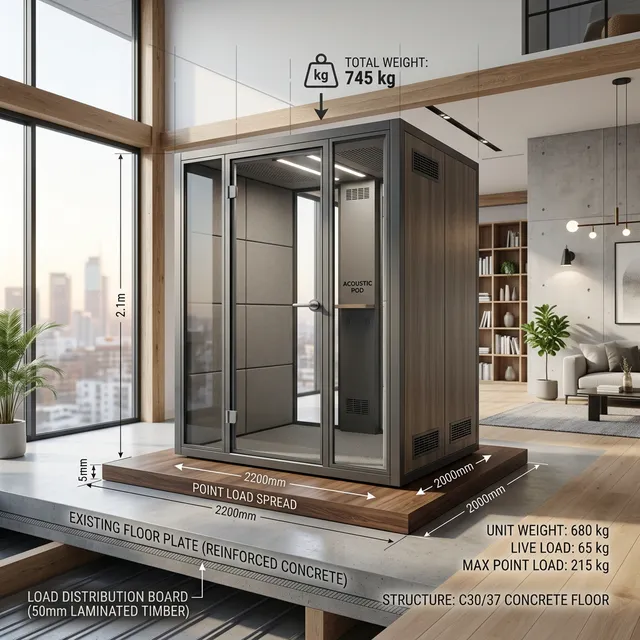
Bottom Line: The legal load limit for residential floors in most urban apartments (including Japan’s Building Standards Act) is roughly 180kg per square meter (1,800N/㎡).
Professional soundproof units or acoustic pianos often concentrate loads of 500kg to 1,000kg (1 ton) into a single 1.5㎡ area. This exceeds the legal design limit by almost 300%. While catastrophic floor failure is rare, structural sagging, door misalignment, and long-term fatigue of the building’s joists are genuine risks.
This briefing outlines the Load Distribution Protocol for safely integrating high-mass acoustic enclosures into modern apartments.
1. The 180kg/㎡ Ceiling: What It Means for You
Architectural design standards assume a distributed load of individuals and furniture.
- The Calculation: A 1.2-Tatami space (approx. 2.0㎡) is designed to handle ~360kg.
- The Reality: A Yamaha Abitex unit (350kg) + Grand Piano (350kg) + Pianist (70kg) = 770kg.
You are effectively placing over twice the intended mass on the structure.
2. Engineering Solution: From Point Loads to Surface Loads
The primary danger is “Point Loading”—where the narrow legs of a piano or the corners of a booth punch through the laminate flooring or subfloor.
- The Distributor Plate (Base Plate): Install a high-rigidity baseplate (15mm to 20mm thick MDF, Plywood, or even thin Steel) across the entire footprint of the booth. This forces the load to spread across multiple floor joists, reducing the pressure per square meter.
- Strategic Placement: Avoid placing the unit in the center of a room span. Position it against load-bearing walls, near columns, or directly over a main floor beam (Joist lines) to utilize the building’s maximum structural stiffness.
3. Weight Simulation by Unit Category
| Category | Typical Size | Total Weight (Est.) | Load per ㎡ |
|---|---|---|---|
| Ultralight (OTODASU) | 1.3㎡ | ~40kg | Negligible |
| Cardboard (Danbocchi) | 0.8㎡ | ~30kg | Negligible |
| Pro Unit (Yamaha/Kawai) | 2.0㎡ | 350kg - 600kg | 175kg - 300kg/㎡ |
| Pro Unit + Acoustic Piano | 2.5㎡ | 800kg - 1,100kg | 400kg+ / ㎡ (Critical) |
Note: Always factor in the weight of the occupants and additional gear (racks, furniture).
4. Risk Management for Tenanted Properties
- Lease Agreements: Most residential leases forbid heavy equipment. Unreported installation can lead to security deposit forfeiture due to permanent floor indentations.
- Consultation Protocol: Always obtain written confirmation from the landlord or management association regarding “Piano and Soundproof Room limits.”
5. Summary: Safety Factors in Acoustic Design
Never prioritize sound isolation at the expense of structural safety.
- Audit the total mass (Unit + Instrument + User).
- Deploy a distribution plate to leverage multiple joists.
- Map the building skeleton to find the stiffest mounting point.
Following this protocol ensures your creative sanctuary remains a permanent asset rather than a structural liability.