Sponge Doesn't Stop Sound: The Difference Between \"Quiet\" and \"Silent\"
\"I bought acoustic foam on Amazon, but my neighbors are still complaining.\" This is the #1 mistake in DIY soundproofing. Learn the brutal physics of why 'Absorption' is NOT 'Isolation' and stop wasting your money on useless foam.
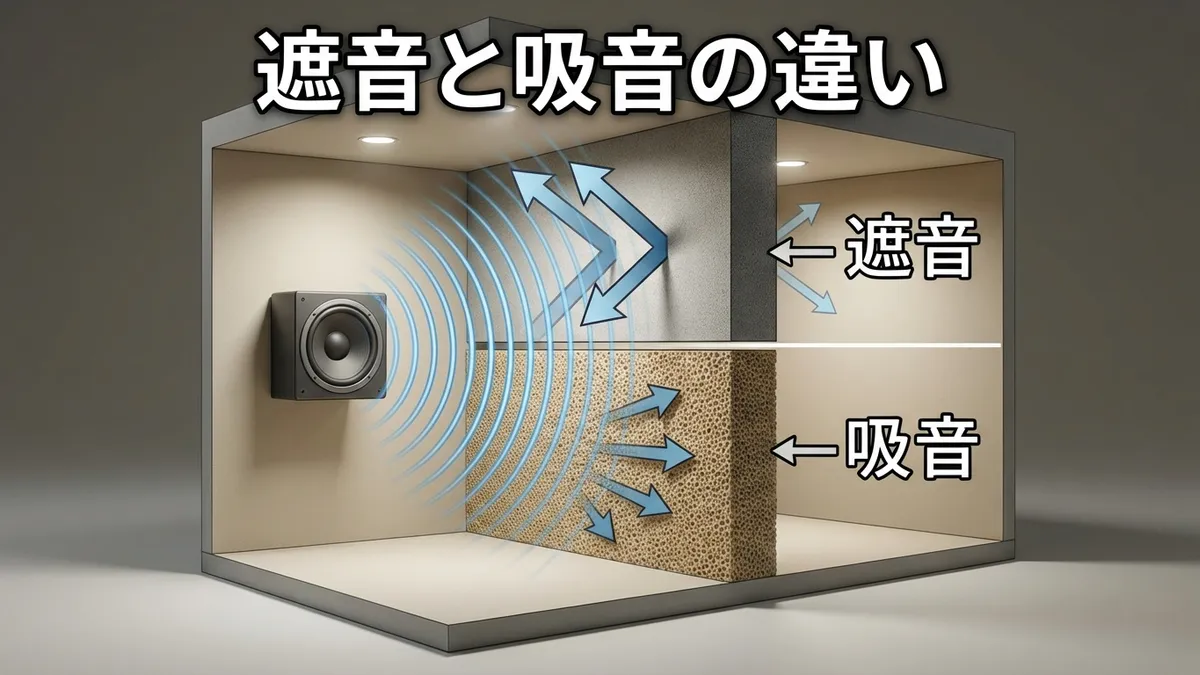
“I bought these egg-carton-shaped sponges, stuck them to my wall, and my neighbor still banged on it ten minutes later.”
This is the most common cry for help at BouonLab. Let’s be brutally honest: Acoustic foam, no matter how thick, will NOT stop sound from leaving your room. Not even by one decibel.
If you’re trying to block out your loud neighbor or stop your PC’s fan noise from bothering your partner in the next room, you’ve been sold a lie. You’re trying to play baseball with a hollow plastic bat and wondering why you can’t hit a home run.
1. The Problem: You’ve Bought a “Sound-Through Sieve”
The biggest misunderstanding in the world of acoustics is the confusion between “Absorption” and “Isolation.”
- Absorption (Foam/Sponge): These materials are porous. Their job is to reduce reflections inside the room. They suck up the high frequencies so your voice doesn’t echo.
- Isolation (Heavy Walls/Mass): These materials are dense and heavy. Their job is to physically block sound from passing through to another space.
Acoustic foam is like a high-quality bath towel. It’s great at soaking up water (echo) on the surface, but if you hold that towel up during a rainstorm, you’re going to get soaked because water (sound) goes right through the holes.
2. The Agitation: Wasted Money and False Security
Using only “soft” materials to stop noise results in three major heartbreaks:
- “Dead” Room Syndrome: You cover every inch of your wall with black foam, and suddenly the room feels “stuffy” and unnatural. It’s oppressive to work in, yet the noise leakage remains exactly the same.
- Financial Drainage: You’ve spent $200-$500 on Amazon foam that does nothing to solve your actual problem.
- The “Safety” Myth: Many cheap foams are extremely flammable. Applying them to your walls creates a massive fire hazard—something Japanese fire codes strictly monitor, but many international DIY-ers ignore.
3. The Solution: Master the “Law of Mass”
To truly stop sound, you need Mass. Sound energy hates hitting heavy things. It hits a massive object, can’t make it vibrate, and reflects back. This is called the “Mass Law.”
What You Actually Need for Isolation:
- Mass Loaded Vinyl (MLV): A thin but extremely heavy rubber-like sheet (approx. 1lb per sq. ft.).
- Drywall / Plywood: Solid, dense boards that provide the physical barrier.
- The “Soundproof Sandwich”: The Golden Rule of the Tokyo Standard.
The Winning Formula:
[ Neighbor’s Wall ] + [ MASS: To Block Sound ] + [ ABSORPTION: To Kill Echo ] = SILENCEWithout the Mass layer, you’re just treating the acoustics, not the soundproofing.
Summary: Foam is the “Seasoning,” Mass is the “Meal”
Acoustic foam is the salt on your steak; it makes the room’s sound taste better. But if you’re hungry for silence, you need the steak—which is a heavy, solid wall.
Before you buy another piece of foam, stop. Measure the weight of your wall. If it isn’t heavy, it isn’t soundproof. Start with Mass Loaded Vinyl or a second layer of drywall.
Stop being a victim of marketing and start following the laws of physics.
Related Articles: