Active Noise Control (ANC) in 2026: The Future of Soundproof Smart Offices
Explore how 2026 Active Noise Control (ANC) is moving beyond earphones to "silencing an entire room." We explain the future of smart offices powered by negative phase silence for low-frequency noise.
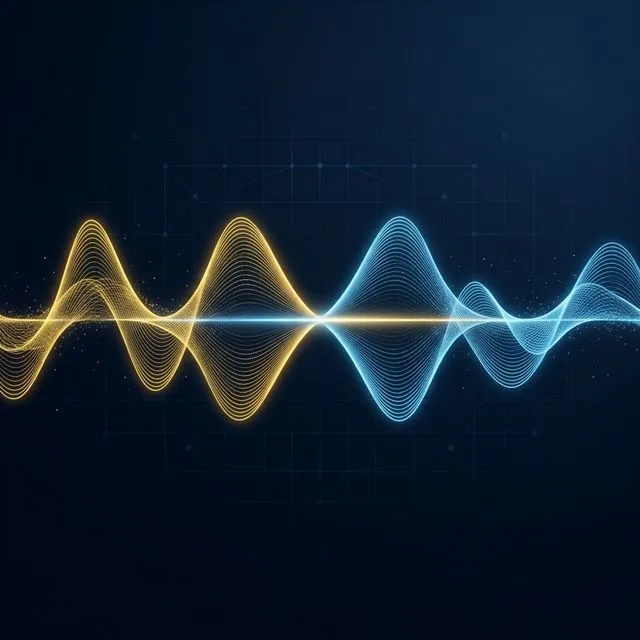
“Active Noise Canceling (ANC),” which has become commonplace in the world of earphones, is now moving beyond the scope of earphones to “silencing an entire room.” In 2026, sound insulation engineering is evolving from a struggle with physics—“bouncing back with heavy materials”—to wave control—“canceling sound with sound.”
In this column, we explore the future shaped by latest sound insulation technology.
1. Shattering the Low-Frequency Barrier with “Opposite Phase”
Conventional sound insulation materials (soundproofing and sound-absorbing sheets) have had a decisive weakness: the lower the sound (engine noise, air conditioner outdoor units, low-frequency vibrations), the thicker and heavier the material needed to eliminate it.
The latest active sound insulation panels turn this weakness to their advantage. Microphones embedded in the wall detect external noise, and “opposite phase waves (waves with the opposite shape)” are instantly emitted from dedicated speakers, literally “canceling out” heavy bass that can’t be fully blocked by physical walls.
2. “Transparent Soundproof Rooms”: Making an Office Revolution Possible
The biggest benefit of this technology is the “balance of openness and silence.”
Until now, soundproof meeting rooms have been divided by robust walls, which led to a challenge of feeling confined. However, the latest “Directional ANC Systems” can pinpoint specific areas for silencing.
- Confidentially in Open Spaces: Content of conversations doesn’t leak to the surroundings, and surrounding noise isn’t heard, creating a virtual “Sound Cocoon.”
- Lightweight and Cost Reduction: Highly sound-isolated environments are achieved purely with retrofitted panels, without reinforcing the building’s own structure.
3. “Hybrid” of Sound Insulation Materials and Technology
Of course, it is still difficult with today’s technology for ANC alone to 100% eliminate the sound of drums or the intense attack of a piano.
The forefront of 2026 is a “hybrid of Passive (sound insulation with physical materials) and Active (electronic noise canceling).”
- Mid-to-High Ranges: Handled by conventional, superior sound absorption and insulation materials (gypsum boards, sound insulation sheets, etc.).
- Low Ranges and Unpleasant Ambient Noise: Efficiently removed with the latest active control panels.
With this combination, securing sound insulation performance (equivalent to Dr-45) with walls less than half the thickness of conventional ones has become a reality.
Summary: Toward an Era of “Redesigning Silence”
Once, “heavyweight architecture” was necessary to obtain a quiet room. However, from now on, software and sensors will rewrite the air around us in real time.
“Sound resonates” or “sound disappears”—switching with just a single button. The future of “programming the sound environment” is just around the corner.